
How to choose a tent?
How to choose a tent?
A tent [sound: zhangpeng] is a shed propped on the ground to provide shelter from wind, rain and sunlight and for temporary living. It is mostly made of canvas and can be removed and transferred at any time together with supporting materials. The tent is carried in parts and assembled only after arriving at the site, so it requires various parts and tools. Only by understanding the names and usage of each component and familiarizing yourself with the structure of the tent can you set up the tent quickly and easily. A tent is an important piece of equipment for camping, but it is not the only equipment. Its role in camping is limited. Generally speaking, tents do not guarantee warmth. Camping warmth is the task of sleeping bags. The main functions of tents are windproof, rainproof, dustproof, dewproof, and moistureproof, providing campers with a relative protection. Comfortable rest environment.
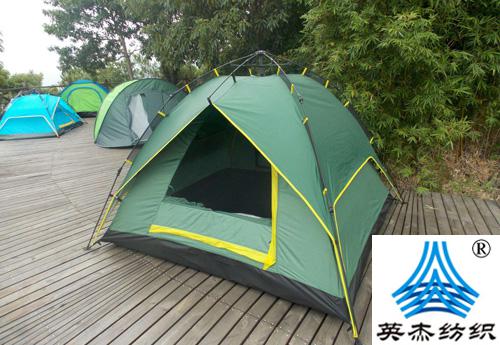
Based on the above goals, the following factors should be considered when choosing a tent:
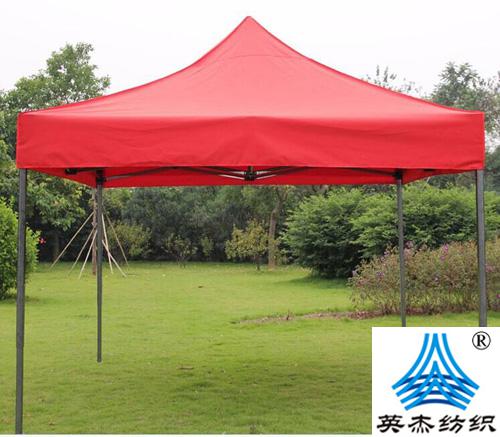
1. Easy to use and carry. For carrying, if you are a backpacker, a traditional tent is more convenient. After disassembly, you can put it directly into your backpack. Self-driving people can choose a quick-open tent. When folded, it has a round cake shape, which is suitable for putting in the trunk.
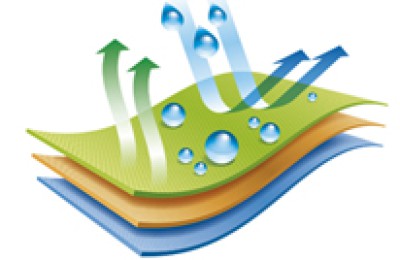
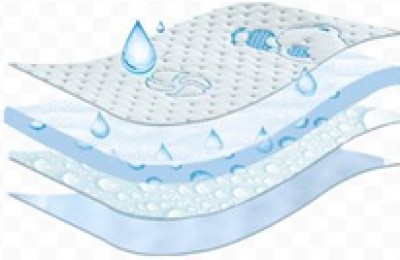
2. The outer tent is waterproof and the inner tent is breathable, two essential points for a high-quality tent. The common tent coating is PU coating. PU is a polyurethane polymer organic substance. PU coating is a stable and low-temperature resistant coating that is commonly used on various fabrics. The thickness of the PU coating and coating technology determine the waterproofness of the fabric. The coating thickness is expressed in mm, indicating the static waterproof column height of the coating under laboratory conditions.
-PU800 coating shows that the coating is impermeable under a static water column of 800mm. PU800 coating can protect against light to moderate rain.
-PU1000-1200 coating can protect against moderate to heavy rain.
-Coatings exceeding 1500mm can basically be used in various environments.
Many domestic tent fabric factories have poor technical equipment and unstable PU coating technology. The actual rainproof performance of PU1000 coated fabric is equivalent to PU500, and it is very uneven, and the rainproof performance cannot be guaranteed. Therefore, when choosing a tent, it is recommended to choose a high-quality manufacturer. Many well-known brands do not represent high quality. Instead, some tents are used for export. Due to the strict quality requirements of foreign businessmen, such products are an ideal choice for travel enthusiasts.
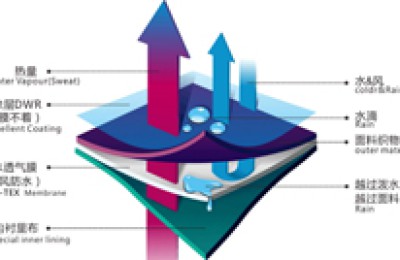
In addition to PU coatings, foreign textile companies have developed many new high-functional coatings using chemical organic polymer technology, such as GORE-TEX (Gore), POWER-TEX (SALEWA), CONDUIT (MOUNTAINHARDWARE), OMNI, MEMOTEX wait. These coatings have strong water permeability and good air permeability, and are called “breathing fabrics.” The principle of breathability is that the coating is a porous film layer, and the diameter of a single pore is smaller than gas water molecules but larger than liquid water molecules. In this way, rainwater from the outside cannot pass through the coating, but water vapor emitted by the human body can penetrate into the outside world.
We know that the air permeability of breathable fabrics is two-way. When the outside humidity is high, moisture will also penetrate into the interior of the fabric. The texture of nylon cloth mainly depends on the quality of nylon filament, textile density, dyeing technology and textile process. For example, DuPont’s Codura nylon fabric in the United States has a wear resistance index several times higher than that of ordinary nylon yarn. In terms of density, there are 170T, 190T, 210D and higher weave nylon fabrics. Foreign professional tents mostly use designated imported materials, while ordinary tents use nylon fabric produced in South Korea. The inner tents of low-end tents use nylon cloth or ordinary gauze, while the inner tents of mid- to high-end tents use dense and high-quality gauze to ensure good air permeability and mosquito-proof functions.
3. The poles have high strength and good resilience. Aluminum poles are better than fiberglass poles. At present, the best poles are carbon poles, then aluminum alloy, then fiberglass, and finally iron poles (which are almost useless except for the army). Most of the aluminum alloy poles are scandium aluminum alloy, 7075T9, and 7001T6 in terms of price and performance. The wind resistance of a tent is not only related to the diameter of the tent poles, but also to the number of sets of tent poles. Generally speaking, the more sets of tent poles, the better the wind resistance. For example, a tent with two sets of ordinary aluminum poles can withstand strong winds of about level 7-8. The windproof ability of 3 sets of aluminum poles is about level 9. A tent using 3-4 sets of 7075 aluminum poles can be used in a blizzard environment of around level 11.
4. The bottom of the account must be waterproof and wear-resistant. The bottom of the tent is required to be waterproof and strong and wear-resistant. Commonly used tent bottom materials are PE cloth and waterproof polyester cloth. PE tent bottoms are used in mid- to low-end tents, and waterproof polyester fabrics are used in mid- to high-end tents. PE is a polyethylene material, similar to a low-end snakeskin bag. The actual tent uses PE material with a waterproof film on both sides, including a large number of export tents that use this material. The bottom of the tent is in contact with the ground and is easily scratched by gravel, grass roots, branches and other debris. Therefore, before camping outdoors, you should clean up hard objects on the ground, or use tent cloth to lay it on the ground as a protective layer. Tent ground cloth generally uses 420D wear-resistant Oxford cloth.
5. Choose a tent with front and rear double doors or windows facing each other for better ventilation. At this point, the new quick-opening tents are better designed and have better ventilation.
6. The design must be reasonable and there must be enough ground tents and windproof ropes. Accessories such as packaging bags, tent pegs, and tent ropes also affect the use of the tent. The packaging bag should be strong and durable, the number of tent pegs should be sufficient, the aluminum pegs should be strong, and the tent ropes should be used to fix the tent.
often�’s tent has 3 support methods:
1. Support the inner tent and put it on the outer tent, that is, use brackets to prop up the inner tent, then put the waterproof outer tent on it, and then fix it. This support method is more convenient. Most tents use the support method of inner support and outer cover, such as SANFOSUNSHINE, HOLIDAY, etc.;
2. Support the outer tent and hang the inner tent, that is, first prop up the outer tent, and then hang the inner tent on the outer tent. This support method is more conducive to rain protection, because the inner tent hung inside always maintains a certain distance from the outer tent, but it takes some time to support it for the first time. E225 uses this support method;
3. It is supported by a single frame, and then fixed with a ground roof and a drawstring. This kind of tent support environment has limitations. It must be an environment where nails can be driven into the ground or ropes can be tied. The tent cannot stand automatically on cement floors and hard stone floors. Single pole tents and ridge tents use this support method.
Before buying a tent, you should ask 3 questions:
1. In what season of the year or under what environment do you want to use the tent?
2. How many people often use the tent?
3. How much do you want to spend?
Tent storage
1. After using the tent, in addition to promptly cleaning away dust and attachments, the moisture on both sides of the fabric should also be wiped off, and it should be folded and stored after it is completely dry. If it is stored before it is completely dry, it will easily cause problems such as mildew and adhesion of the fabric. Affect the service life of the tent!
2. After the tent is completely dry and folded for storage, try not to place other items on the tent to avoid permanent fatigue at the bends of the waterproof tape material and degumming.
3. Regularly or irregularly take out the tent to dry in the sun (avoid direct sunlight) for half a day, rearrange it and then fold it for storage. The advantage of this is that it can prevent the tent fabric from mildew and adhesion, and it can also make the bends of the tent waterproof. The rubberized strips will not cause permanent fatigue and extend the overall service life of the tent.
4. After cleaning the tent, it is not advisable to compress and store it in the original storage bag.
If you only use the tent in spring, summer and autumn, and in low altitude areas (below 2000 meters), ordinary PU1000 to 1500 glass pole tents are enough. If you like to travel long distances by yourself, choose a single-person tent, or a 1- to 2-person tent, such as a single pole tent, or a JWS tent; if it is for 2 or 3 people, choose a tent of corresponding size, which is generally occupied by each person. The width is 55 to 60 cm. The SUNSHINE tent is 1.4 meters wide, so it is a tent for 2 people. E225 is 165cm wide and is a tent for 2-3 people. LD110 is 2 meters wide and is a 4-person tent. When introducing a tent as a tent for 2-3 people, it can be understood as follows: if it is a thin person, 3 people, if it is a fat person, 2 people. If you use a tent in winter and in relatively high-altitude areas, it is recommended to consult with professionals, because in high-risk environments, the choice of equipment directly affects your safety. Generally, such an environment requires aluminum pole tents with PU1500 or above coating.
Although the use of tents is not complicated, it should be said that it is also a knowledge. The same tent, if used properly, will have better windproof and rainproof effects, but not ideal if used incorrectly. Of course, you can also choose different tents for different purposes. After all, there are differences between professional outdoor tents and amateur ones. You should have a clear positioning when choosing so that you can choose a satisfactory tent.
Economical and affordable, domestic brands are generally Xuelang, Mugaodi, and Kailas. The positioning of these three brands is also different. It depends on your own affordability. If you have better financial ability, it is recommended to buy a better one. Q83MWN8b6Z
Disclaimer:
Disclaimer: Some of the texts, pictures, audios, and videos of some articles published on this site are from the Internet and do not represent the views of this site. The copyrights belong to the original authors. If you find that the information reproduced on this website infringes upon your rights, please contact us and we will change or delete it as soon as possible.
AA