
Application of water-based polyurethane in textile finishing
Application of water-based polyurethane in textile finishing
Polyurethane is the abbreviation of polyurethane (PU). It is a block polymer formed by addition polymerization reaction, with flexible and elastic polyether or polyester as the soft segment, rigid and hard urethane as the hard segment, and a polymer compound containing a considerable number of urethane bonds. [1]. Polyurethane first appeared in Europe as a textile finishing agent. It is usually a solvent-based product and is mixed with cross-linking agents and coatings for coating on textiles. In recent years, with the enhancement of people’s environmental awareness and the introduction of environmental protection legislation in various countries. Water-based polyurethane is gradually replacing solvent-based polyurethane, especially in Europe, America and Japan, which have successively developed a series of products. At present, water-based polyurethane has been successfully used in the textile printing and dyeing industry. Practice has shown that it can give fabrics excellent softness, fullness, washability, wear resistance, good resilience, smoothness, good feel, antistatic, etc. Therefore, The research, development and application of water-based polyurethane in the textile industry have developed extensively and rapidly.
The development and production of polyurethane can be traced back to the Second World War. Water-based polyurethane was first prepared by the famous scientist SchlackP in 1942 through forced dispersion with an external emulsifier [2]. It was first industrially produced in 1967. In 1972, Bayer took the lead in developing a water-based polyurethane emulsion for leather coating. For decades, Europe, the United States and Japan have attached great importance to the research and development of water-based polyurethane. Today, there are many types of water-based polyurethane products that have been successfully used in textiles, printing and dyeing, and leather processing
industries such as engineering, coatings, adhesives, wood processing, construction, and papermaking.
Compared with foreign countries, there is still a considerable gap between the development and application of water-based polyurethane in my country. In recent years, there have been two self-crosslinking water-based polyurethane coating agents, Y503 and Y504, developed by Donghua University [3], and anionic polyurethane emulsion developed by Jiangsu Institute of Petrochemical Technology, which has been adopted by Yantai Chemical Industry Research Institute, Anhui University and other units. Different process routes have been used to synthesize water-based polyurethane for different uses, and certain results have been achieved in different application fields. However, domestic water-based polyurethane products, especially those used in textile printing and dyeing, have few varieties and unstable performance and quality, which has led to many related industries relying on imports for a long time, especially the printing and dyeing industry, most of which are imported from Japan, the United States, Europe, etc. country imports.
1Classification of water-based polyurethane finishing agents
According to the degree of dispersion of molecular particles in water, water-based polyurethane is divided into three types: emulsion, water dispersion, and water-soluble. Table 1 lists the characteristics of the three types of water-based polyurethane.
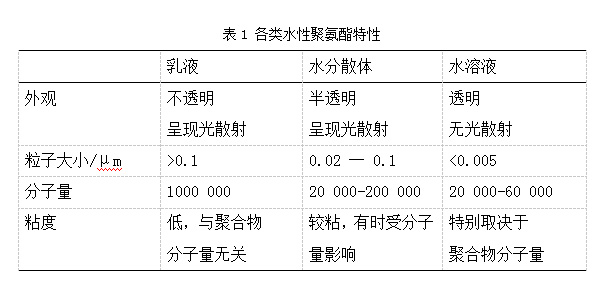
As can be seen from Table 1, the particle size of water-based polyurethane is very small and has strong water dispersibility. Therefore, the finished fabric feels delicate and has good adhesion.
According to the introduction of different charged hydrophilic groups, water-based polyurethane can be divided into four types: nonionic, anionic, cationic, and zwitterionic. When the hydrophilic groups are carboxyl and sulfonic acid groups, the resulting emulsion is anionic
; When the hydrophilic group is a tertiary amine group, it is cationic; when the hydrophilic group is water-soluble polyoxyethylene glycol or a hydrophilic copolyether containing an oxyethylene chain, it is non-ionic; zwitterionic The type is the coexistence of carboxyl or sulfonic acid groups and tertiary amine groups.
In addition, water-based polyurethane can be divided into reactive and non-reactive types. Although their common feature is that they contain isocyanate groups in their molecular structures, the former uses a blocking agent to temporarily block the isocyanate groups, which then come back during textile finishing and cross-link with each other. It forms a three-dimensional network structure and is fixed on the surface of the fabric.
According to the emulsification series classification, water-based polyurethane can be divided into external emulsification type and self-emulsification type. The external emulsification type, also known as the forced emulsification type, is made by forcibly emulsifying hydrophobic polyurethane with an external emulsifier. The self-emulsifying type, also known as the internal emulsifying type, does not need to add an additional emulsifier during preparation. Instead, a hydrophilic monomer called an internal emulsifier is used to give the polyurethane several hydrophilic groups, allowing it to self-emulsify into a water-based product.
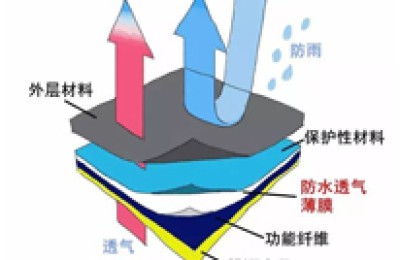
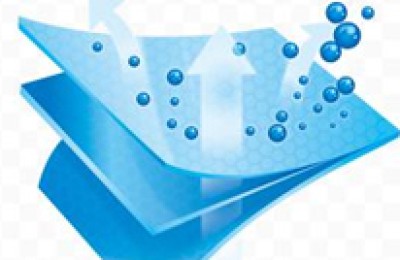
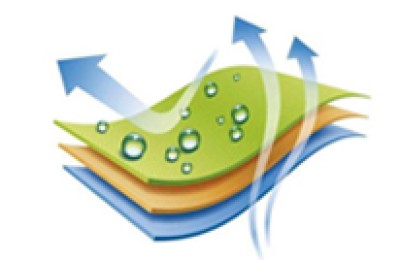
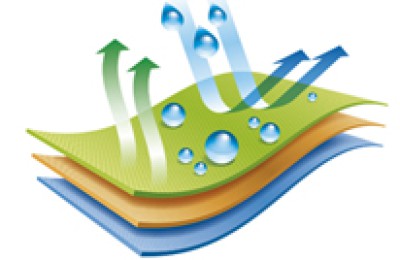
According to the classification of curing characteristics, polyurethane can be divided into thermosetting and thermoplastic; according to the oligomer polyol classification, it can be divided into polyester type and polyether type; according to the parent structure of isocyanate, it can be divided into aliphatic and aromatic; according to the finishing function It can be divided into water-based polyurethane anti-wrinkle agents, color-fixing agents, adhesives, waterproof and moisture-permeable coating agents, imitation suede finishing agents and antistatic agents, etc.
2 Preparation and modification of water-based polyurethane
2.1 Preparation of water-based polyurethane
The current method used to prepare water-based polyurethane is to reduce the activity of isocyanate groups or introduce hydrophilic groups into the molecular chain. Research can be carried out from three aspects: anionic, cationic and non-ionic products:
2.1.1 Cationic type
Through a cationic chain extension reaction, a polyurethane polymer prepolymer is formed [4], reactive active groups are introduced, and a dispersed emulsion is formed after sodium bisulfite end-capping and emulsification, which can react with anionic groups such as fabrics and dyes after unblocking , can be used as high-performance color fixing agent, durable elastic finishing agent, etc.
2.1.2 Anionic type
Polyether polyol is used to form a multi-dimensional polymer water dispersion after a chain extension reaction [5]. During finishing, precipitates are formed inside and outside the fiber, which can form network cross-links with the fabric and other surface structures to improve the inside and outside of the fiber. structure, which can be used to improve fabric wearing properties, anti-pilling, and water resistance.�Transparent. From different
The change of its Zeta potential under the pH value can be seen: when pH8.9, the Zeta potential is negative. value. At this time, the anionic dye adsorbs electrostatically, and the cationic water-based polyurethane is adsorbed around the dye.
4 Outlook
After years of development, water-based polyurethane has made significant progress. However, its synthesis cost is still high, and some of its properties still lag far behind solvent-based polyurethane. In the foreseeable future, water-based polyurethane will continue to be studied in the following aspects:
(1) Carry out research on two-component water-based polyurethane, prepare high-solid content or solvent-free hydroxyl resin that matches high-solid-content polyurethane curing agents, and develop moisture curing agents without residual isocyanate groups. It can greatly improve the strength of coating films at lower temperatures.
(2) Use other polymer materials to modify water-based polyurethane.
(3) Strengthen the research on composite modified water-dispersed polyurethane (especially acrylic modification, silicone modification, and organic fluorine modification) to improve the comprehensive performance of water-dispersed polyurethane.
(4) Use renewable resource vegetable oil to prepare modified water-based polyurethane coatings.
(5) Sealers and cross-linking agents for water-based heat-curing polyurethane.
(6) Research and commercialization of water-based polyurethane application additives.
5Conclusion
At present, water-based polyurethane has been widely used in the textile industry as a textile auxiliary with excellent properties such as environmental protection, high performance, and no aldehyde. It is mostly used as a waterproof and breathable coating agent, but as an antistatic agent, color fixing agent, etc. There are few studies on the theoretical mechanism or practical application. In the future, due to the continuous improvement of the performance of water-based polyurethane in coating agents, wool anti-shrinkage finishing agents, and anti-pilling and fluffing agents, more water-based polyurethane no-iron finishing agents, antistatic agents, and fixatives will be used. Research on new uses such as colorants provides good finishing solutions for the textile industry. dfgebsrg
Disclaimer:
Disclaimer: Some of the texts, pictures, audios, and videos of some articles published on this site are from the Internet and do not represent the views of this site. The copyrights belong to the original authors. If you find that the information reproduced on this website infringes upon your rights, please contact us and we will change or delete it as soon as possible.
AA