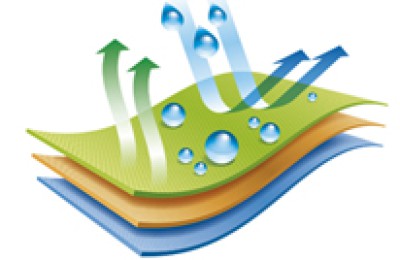

Polyester-spandex knitted fabrics have the advantages of good drape, comfortable covering, rich and soft feel, comfortable wearing, and breathability. Comparable taking performance, thus winning a broad market. As people have higher and higher requirements for the color fastness of clothing fabrics, they also have high requirements for the washing color fastness of printed and dyed polyester/spandex products. For example, six-fiber staining is level 4, and the color fastness to immersion is level 4 to 5.
Production process
Polyester and ammonia knitted fabric → degreased and washed (loose type pre-shrunk washing machine, 60~95℃, 7 tanks) → pickled (glacial acetic acid 0.5 g/L) → pre-shaped (195~ 205℃, 15 m/min) → Dyeing (130℃, 50 min) → Acid reduction cleaning (90°C, 15 min) → Alkaline reduction cleaning (90°C, 15 min) → Acid neutralization (glacial acetic acid 0.5 g/ L) →Finished product shaping (130~140℃, 15~30 m/min) →Test.
Production process
1. Pre-treatment
1.1 Refining and degreasing water washing
Principle: Polyester-span elastic fabric contains more spinning and weaving oils, spandex amino silicone oil, before dyeing It must be completely removed to prevent oil substances and dyes from forming lakes, causing problems such as fabric flowers and stains. However, silicone oil agents are difficult to remove using ordinary scouring conditions and are the main cause of dyeing defects such as stains. Therefore, spandex-specific scouring agents must be used to fully perform the scouring process.
Refining equipment: Choose a continuous heated spray loose-type pre-shrunk washing machine (more than six sections). The loose-type pre-shrinking washing machine can effectively remove oil substances. At the same time, it ensures that the cloth surface does not wrinkle, which is beneficial to the smoothness of the cloth surface after dyeing.
Recipe for scouring: high-efficiency scouring emulsifier 20-30 g/L, soda ash 2g/L
Cloth removal requirements: oil removal After washing, the cloth needs to be set in time; the pH value of the cloth surface is ≤7.5; the less high-efficiency scouring emulsifier residue on the cloth surface, the better, and it must be washed clean. In order to ensure that the cloth surface is clean, the pre-shrinking effect is optimal, and the grease on the cloth surface is cleanly removed, the vehicle speed should be set based on the weight of the fabric to 15-30 m/min.
1.2 Pre-shaping
Principle: Polyester-span elastic knitted fabrics are During the weaving process, the presence of large residual stress inside the gray fabric will cause the fabric structure to deform. If the residual stress in this area is not eliminated, problems such as creases and stripes may easily occur during the dyeing process of the fabric. At the same time, the width and weight of the fabric will be difficult to control, and shrinkage will be unstable. The purpose of pre-shaping is to eliminate the internal stress of spandex and stabilize the quality indicators such as fabric width, unit area quality and fabric elasticity, so as to prevent it from shrinking during the dyeing process and affecting the dyeing effect, and no error will occur in subsequent processes. Big changes. The quality of the pre-forming effect will directly affect the subsequent processes. If the pre-forming temperature is too low and the speed is too fast, the wrinkles on the cloth surface will not be easily removed, and it is easy to form broken marks, curling and unstable width during dyeing. ; If the pre-setting temperature is too high, the fabric will turn yellow and hard, and its strength and elasticity will decrease, and even the spandex will break. Therefore, it is necessary to strictly control the preforming process conditions, have a certain positive overfeed during preforming, and lower the rolling tension rod.
Shaping equipment: eight-section or ten-section open width shaping machine.
Pre-forming process: clean water in rolling car, rolling car pressure 5 N/cm2, setting machine temperature 195~205℃, vehicle speed 18~30 m/min, overfeeding 15% .
Cloth dropping requirements: the cloth surface is flat; the cloth is dropped on a breathable net bucket (to prevent heat press creases); if necessary, the air volume should be appropriately increased to achieve timely cooling of the cloth surface (swinging) for heat dissipation. The final cloth surface temperature is required to be normal temperature).
2. Dyeing
2.1 Dye Selection
Disperse dyes generally stain spandex seriously. When selecting disperse dyes, we must consider that they have good coloring properties and good dyeing properties. At the same time, the staining on spandex can be easily removed. . When dyeing with ordinary disperse dyes, the spandex fiber is stained seriously and is not easy to remove. In the end, the fastness indicators of polyester and spandex fabrics do not meet customer needs.
2.2 Dyeing equipment
High temperature and high pressure overflow jet dyeing machine: Using an overflow dyeing machine can Reduce the tension and pulling force endured by polyester and polyurethane fabrics at high temperatures without causing damage to the elasticity of polyester and polyurethane fabrics, keeping the fabric in a relaxed state and avoiding shrinkage.
2.3 Dyeing process
Dyeing with disperse dyes requires high temperature and high pressure, and polyester fiber is processed under high temperature conditions. The color effect is better, but spandex is not resistant to high temperatures. Under high temperature conditions, spandex yarns are prone to brittleness, resulting in reduced strength, broken wires, defects and other problems. Therefore, in order to balance polyester and spandex fibers, the dyeing temperature was selected after experiments and production research. 130℃ can meet the coloring conditions of polyester and better avoid damage to spandex. Similarly, dyeing time, dyeing pH value, heating rate and cooling rate will all cause damage to spandex fibers. After experiments and mass production tests, in order to reduce damage to spandex, the dyeing time was selected to be 40 minutes, the dyeing pH value was 3.8 to 4.5, and the dyeing temperature rise was controlled within 1.°/min.
Raising the temperature too quickly will cause color blooms due to insufficient holding time. Cooling should be controlled between 1 and 1.5 °C/min, as cooling down too quickly will cause chicken paw prints and even color blooms.
2.4 Reduction cleaning
During the dyeing of polyester-spandex knitted fabrics, the staining of spandex by disperse dyes It is inevitable� The purpose of reduction cleaning is to remove the floating color on the fabric and the disperse dye adsorbed on the spandex surface, and improve the color fastness of the fabric to washing. Restoration cleaning must not only effectively remove the floating color on the fabric and the stain on the spandex, but also consider the discoloration of the fabric within a controllable range. After a period of on-site practice, we have adopted the following restorative cleaning method, namely Various fastness indicators have been achieved to meet customer requirements, and the discoloration caused by fabric reduction cleaning is also within control.
Generally, polyester fabrics dyed in dark colors only need alkaline reduction cleaning, but for polyester and polyurethane knitted fabrics. In order to completely remove the floating color on polyester and the staining on spandex, after continuous experiments in large-scale production, it was found that after dyeing polyester and spandex fabrics, adding an acidic reduction cleaning before the alkaline reduction cleaning can significantly improve the setting Color fastness of finished polyurethane knitted fabric. The reason may be: adding thiourea dioxide immediately after dyeing polyester and spandex for acid reduction cleaning, which not only eliminates the need for drainage and acid neutralization washing, shortens the process flow, but also effectively initially removes floating colors on polyester and spandex. The staining can ensure sufficient reaction in the next step of alkaline reduction cleaning, and further remove residual floating color and staining, thereby effectively improving the color fastness of polyester-spandex fabrics.
Reduction cleaning method: The dyed polyester and ammonia fabric is reduced and washed using a two-bath and two-step combination process, with acidic reduction cleaning first and then alkaline reduction cleaning.
Acidic reduction cleaning process prescription:
Thiocarbamide dioxide 3.0%
Alkali Recipe for sexual reduction cleaning process: 36BeNaOH 3.0%, insurance powder 4.0%
2.5 Fastness test before leaving the cylinder
Water immersion fastness test: 5-6 g/L commercial Diao brand washing powder is soaked in heated water at 85°C for 3-4 minutes. At the same time, put in an undyed polyester-spandex fabric interlining to see what the color of the foot water is. After testing, the color faded slightly due to foot water, and the lining cloth containing spandex of the same fiber hardly stained.
Finished product shaping
Polyester and polyurethane fabrics need to be finished as soon as possible after dyeing Set the shape and do not store it for too long after dyeing. Leaving it for too long will easily cause creases and color migration. Like pre-shaping, the whole process of setting the finished product is low tension. The fabric to be determined is evenly and loosely distributed in the cloth car. Under the condition of ensuring that the surface of the polyester-spandex fabric is smooth and wrinkle-free, the setting temperature should not be too high.
Shaping equipment: eight-section open width shaping machine.
Shaping process: the temperature is controlled at 110~130℃; the speed is 20~30 m/min; the addition of hand feeling additives can be done in the feeding trough, and the rolling pressure is 4 N/ cm2.
Author: Fujian Xiesheng Xiefeng Printing and Dyeing Industrial Co., Ltd. Wang Xiancai, etc.</p