
The latest survey data from the China Printing and Dyeing Industry Association shows that from January to May 2020, the main business income of printing and dyeing enterprises above designated size was 86.988 billion yuan, a year-on-year decrease of 20.68%. The average sales profit margin of the industry has dropped significantly, and many companies have encountered unprecedented Operating pressure and increasingly severe market changes are accelerating the transformation and upgrading of China’s printing and dyeing industry.
In recent years, under the dual pressure of the slowdown in the global economy and the tightening of China’s environmental protection regulations, China The reshuffle in the printing and dyeing industry has intensified, forcing traditional printing and dyeing companies to gradually develop in a green and smart direction. At the same time, the “13th Five-Year Plan Development Guidance for the Printing and Dyeing Industry” released in 2016 clearly stated that key projects in the printing and dyeing industry should be implemented and enterprises should be guided to establish intelligent management systems. After four years of practice and development, China has cultivated a number of large-scale smart printing and dyeing enterprises.
It can be expected that under the guidance of environmental protection and industrial policies, the printing and dyeing industry will further optimize the industrial structure and enhance the intelligence of the industry. This article will try to analyze and interpret patent data based on the current situation of the smart printing and dyeing industry, provide reference ideas for printing and dyeing companies to seek industry-university-research cooperation, and explore the intellectual property issues that China’s smart printing and dyeing field may face in cross-border innovation and integration. and models worth learning from.
1 Analysis of patents related to smart printing and dyeing
This article is based on the domestic printing and dyeing industry Research and analyze patent data related to smart printing and dyeing combined with big data and digital transformation. A search found that as of July 2020, there were a total of 1,743 relevant Chinese patents, including 1,053 invention patents, 681 utility model patents, and 9 design patents.
As can be seen from Figure 1, as early as the 1990s, patent applications began to appear in China’s “smart printing and dyeing” direction. After verification of the legal status, the active time of these patent applications It did not last long, and most cases were withdrawn and abandoned. The prospects for industrial application of related technologies at that time were not optimistic.
Figure 1 Annual application trends of various applicants for China’s “smart printing and dyeing” patents
Before 2007, domestic patents for “smart printing and dyeing” were scattered and scattered, and patent applications mainly came from some foreign companies, domestic universities and individual inventors. Since 2007, enterprises have become the main force in “smart printing and dyeing” patent applications. Currently, the proportion of enterprise applications has exceeded 60%, of which the number of patents from local enterprises accounts for about 93% of the total number of enterprise applications; in addition, universities and scientific research institutions Research and development is very popular, accounting for about 20% of the total number of patent applications.
China’s local printing and dyeing enterprises are mainly concentrated in the five eastern provinces (Zhejiang, Jiangsu, Guangdong, Fujian, and Shandong). Their production capacity accounts for more than 90% of the country’s total, and their regional patent reserves are equally strong. , the proportion of “smart printing and dyeing” related patent applications originating from the five eastern provinces has exceeded 60% since 2012 (see Figure 2), and once exceeded 78% in 2016. After 2016, the proportion has stabilized at more than 70%, including some individual applications. Applicant addresses show that these applications mainly come from industrial clusters in the five eastern provinces. Some applicants still have close ties with enterprises and are not purely ” Individual applications”, companies in the five eastern provinces are still the main force in “smart printing and dyeing” patent applications.
Figure 2 The geographical distribution of China’s “smart printing and dyeing” patent applicants
Figure 3 Production capacity and “smart printing and dyeing” patent development trends in the five eastern provinces At a higher level, the southeastern coastal areas continue to play the main role in the development of the printing and dyeing industry; on the other hand, digital production-related technologies are gradually gathering in the five eastern provinces, and advantageous industrial clusters provide fertile land for the transformation of technological achievements.
Judging from the policy orientation of the printing and dyeing industry in recent years, with the continuous strengthening of environmental protection supervision, some small and medium-sized enterprises that cannot bear the cost of “three wastes” treatment may face a huge impact. Medium and large printing and dyeing enterprises can rely on their management, capital and scale advantages to improve environmental protection facilities and enhance market competitiveness.
The patent reserves related to “smart printing and dyeing” are mainly concentrated in the hands of enterprises, scientific research institutions and universities. Further statistics on the patent applications of several typical innovation entities found that Zhongyuan Institute of Technology has the largest number. However, most of its patents are under review. Currently, there is only one authorized invention and five utility models. Most of the technical themes applied for by this unit are related to digitally improved equipment.
Another institution worthy of attention is the Advanced Manufacturing Technology Research Center of the General Institute of Mechanical Science. Its predecessor was the Machinery Research Center approved by the former Ministry of Machinery Industry and the National Science and Technology Commission in 1997. Advanced Manufacturing Technology Research Center of the Ministry of Industry. This unit has submitted a total of 13 related patents. Currently, there are 4 authorized inventions and 6 utility models. Most of the technical themes are related to the application of artificial intelligence in the printing and dyeing industry.
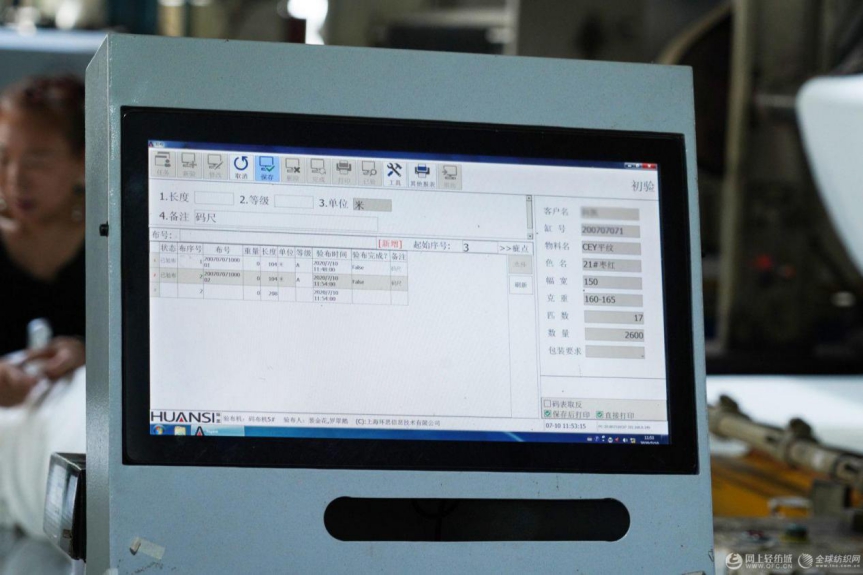
Figure 5 Smart Printing and Dyeing Information Management System
3 Intelligence Chemicalization and green environmental protection are development goals
This article sorts out the patent reserves of innovative entities on the R&D side through patent analysis, and provides reference ideas for small and medium-sized enterprises in the printing and dyeing industry to seek industry-university-research cooperation. . In addition, the author analyzes the intellectual property issues that may be faced in cross-border innovation and integration through case studies, and proposes feasible solutions. For enterprises, they can try to explore the path of transformation and upgrading from the perspective of patents, make full use of information resources such as patent documents, mine industrial scientific and technological information, and grasp industry development trends, which can not only effectively avoid infringement risks but also learn from advanced technologies. Strengthening industry-university-research cooperation and effectively building a talent training system is an important way that cannot be ignored for the transformation and upgrading of domestic textile enterprises, sustainable industrial development, and the creation of a circular economy.
Intelligent, automated printing and dyeing technology and high value-added, green product processing capabilities are the development goals of the smart printing and dyeing field. Based on independent innovation, enterprises fully integrate excellent internal and external resources, give full play to the role of intellectual property rights in protecting and promoting innovation in the process of industrial upgrading, develop clean production technologies that meet higher environmental protection requirements, and significantly improve the level of intelligent manufacturing and informatization applications. , in order to better adapt to policy and industrial structure regulation, and accelerate the overall transformation and upgrading process of the textile industry including smart printing and dyeing.
</p